Transform Your Data Investments into Enterprise-Wide Value
Build on Microsoft Fabric to connect data, scale insights, and unlock broader value across your digital ecosystem.
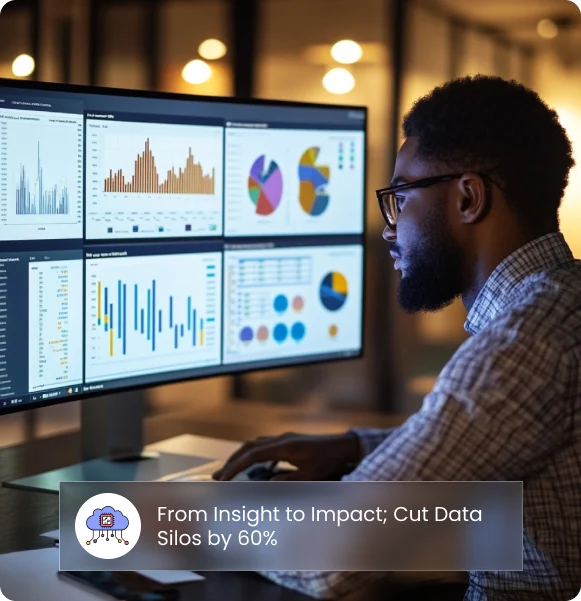
Why Microsoft Fabric Matters
Data has become the foundation for modern decision-making, innovation, and competitive advantage. With Microsoft Fabric, organizations are bringing together data engineering, analytics, and business intelligence into a unified platform that simplifies how data is managed and consumed.
As data strategies mature, the opportunity extends beyond analytics. There is a growing need to align data platforms with the broader application and infrastructure landscape to ensure consistency, scalability, and long-term efficiency.
Without this alignment, organizations may face challenges in fully operationalizing insights, integrating data-driven processes into core systems, and scaling innovation across the business. Expanding the role of Microsoft Fabric within a more connected cloud ecosystem helps bridge this gap and unlock greater value.
How Microsoft Fabric Delivers Greater Value
Organizations that invest in unified data platforms are better positioned to drive innovation and agility. By extending Microsoft Fabric into a more integrated cloud strategy, businesses can move from isolated insights to enterprise-wide impact, enabling faster decisions and more scalable operations.

Connect Data with Applications and Operations
Connect additional applications, data sources, and partner systems with ease. Expand your integration footprint to support growing business needs without increasing complexity.

Scale Analytics Across the Organization
Move beyond scheduled or batch processes and enable real-time communication across systems. Improve responsiveness and deliver faster, more dynamic user and business experiences.

Enhance Performance with a Unified Data Foundation
Extend Azure security capabilities across all connected resources. Enforce security baselines, detect risks early, and maintain continuous compliance.

Strengthen Governance and Data Management
Leverage built-in scalability and resilience across services such as messaging and workflows. Ensure consistent performance even as transaction volumes increase.

Enable Real-Time and Advanced Analytics
Use centralized monitoring and analytics to track performance, identify bottlenecks, and optimize integration flows. Make more informed decisions with actionable insights.

Create a Path to Broader Cloud Adoption
Build on your existing services to introduce advanced capabilities such as automation, data integration, and intelligent workflows. Enable faster experimentation and delivery of new solutions.
Book a No-Cost Data & Analytics Strategy Session